Venice: stay in Cannaregio rather than San Marco
San Marco puts everything a few steps away, but it is the most expensive and the busiest district. Cannaregio, between the station and the Rialto, is quieter, and Castello is the calmest of the central districts.
By Rédaction Le Long-CourrierChecked on 9 November 2026Report an errorContains affiliate links
When to go to Venice: the climate month by month
Best months : June, July, August, that is the three months closest to 26 °C in the daytime with the fewest rainy days.
- Highs
- 26 °C
- Lows
- 18 °C
- Rain
- 78 mm
- Rainy days
- 9
Measured averages : Open-Meteo (ERA5 reanalysis), 2015-2024 averages.
Where to stay
San Marco, around the square of the same name, puts everything a few steps away. It is the most expensive and the busiest district.
Cannaregio, between the station and the Rialto, is quieter and livelier in the evening on the residents' side, along the Fondamenta della Misericordia.
Dorsoduro, south of the Grand Canal, is home to the Accademia and Peggy Guggenheim museums, with the sunny quays of the Zattere.
Castello, to the east, is the calmest of the central districts.
Mestre, on the mainland, costs considerably less, about ten minutes away by train or bus. You lose the charm of evenings in Venice.
Hotels in the historic centre are expensive: B&Bs and rented flats are a good alternative. Allow for the walk with your luggage, over bridges with steps.
What to see
St Mark's Square and St Mark's Basilica, covered in gold mosaics. Next to it, the Doge's Palace, seat of power of the Republic of Venice, linked to the prisons by the Bridge of Sighs.
The campanile can be climbed for the view over the lagoon. Today's tower is a reconstruction: the original collapsed in 1902.
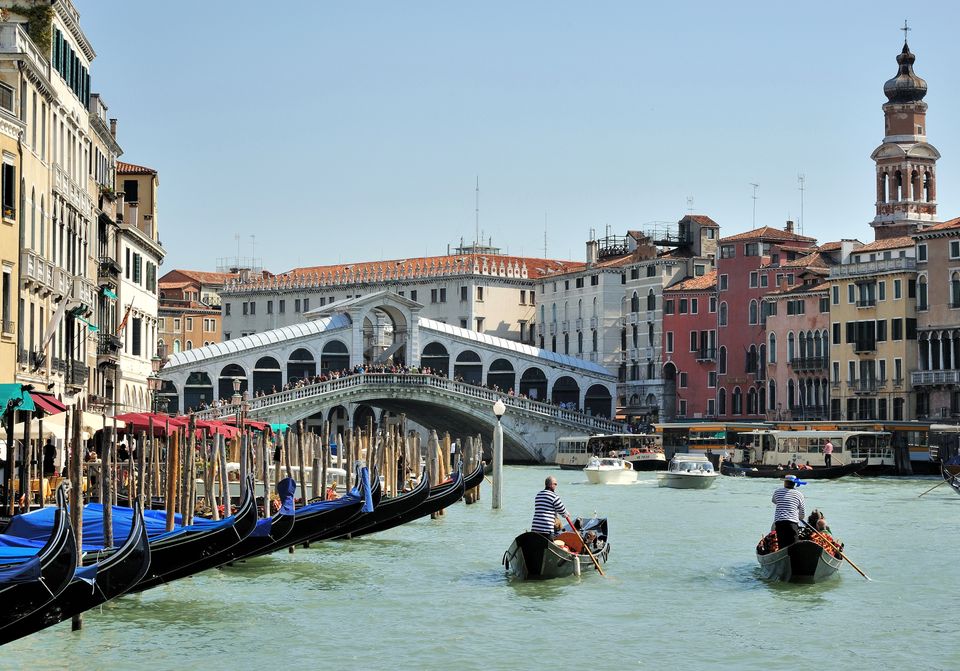
The Rialto Bridge, the oldest of the bridges over the Grand Canal, and the Rialto market right next to it.
The Grand Canal is best travelled by vaporetto: line 1 follows it from end to end, past the palaces.
The museums: the Gallerie dell'Accademia for Venetian painting (Titian, Tintoretto, Veronese), the Peggy Guggenheim Collection for modern art.
The islands: Murano, known for its glassmakers, and Burano, for its coloured houses and its lace.
Where and what to eat
The typical Venetian meal starts in a bacaro, a wine bar where you eat cicchetti (small bites on bread, fish, cured meats) standing at the counter, with a small glass of wine called an "ombra" or a spritz.
To try: sardines in saor (marinated with onions, raisins and pine nuts), cuttlefish ink risotto, Venetian-style liver with onions, and fish from the lagoon.
The restaurants around St Mark's Square are expensive: move a few streets away, towards Cannaregio or Castello, to eat better.
Practical tips
Access fee: on certain very busy days, visitors who come only for the day must pay it online. Those staying overnight are exempt.
Respect the city: do not sit on bridge steps to picnic, do not swim in the canals and do not block the narrow alleys. Fines apply.
Transport: single vaporetto tickets are expensive; a 24-hour pass or longer quickly works out cheaper.
Acqua alta: at high tide, especially in autumn and winter, some squares flood. Raised walkways are put in place, and plastic boots are sold locally.
Venice is best discovered by getting lost in its alleys: leave part of your stay unplanned.
When to go
From April to June and in September-October, the weather is mild and the city a little less crowded.
The carnival, in February, draws huge crowds: book very early.
Summer is hot and humid, with many visitors. Winter is quieter, with a risk of acqua alta.
Frequently asked questions
Which district should I stay in, in Venice?
San Marco to be in the centre (the most expensive), Cannaregio near the station and quieter, Dorsoduro around the Accademia, Castello towards the east for peace and quiet. Mestre, on the mainland, is cheaper but means a train or bus journey.
What should I see first in Venice?
St Mark's Square with the basilica and the Doge's Palace, the Rialto Bridge, the Grand Canal by vaporetto (line 1), then the islands of Murano and Burano.
Do you have to pay to enter Venice?
On certain very busy days, day visitors must pay an access fee booked online. Those staying overnight in Venice are exempt; they pay the tourist tax. Check the calendar before you go.
What should I eat in Venice?
Cicchetti, small bites served in bacari with a glass of wine, sardines in saor, cuttlefish ink risotto and Venetian-style liver.
When should I go to Venice?
From April to June and in September-October. The carnival in February is very crowded, summer is hot and humid, and acqua alta (high tide) mainly affects autumn and winter.


