Gran Canaria: Maspalomas, Las Palmas or Mogán, where to stay
The south of Gran Canaria, from Playa del Inglés to Mogán, offers the most reliable sunshine; Las Palmas, in the north-east, is a real city with its urban beach and its old town. Your choice of base decides your stay.
By Rédaction Le Long-CourrierChecked on 24 November 2026Report an errorContains affiliate links
When to go to Gran Canaria: the climate month by month
Best months : June, July, August, that is the three months closest to 26 °C in the daytime with the fewest rainy days.
- Highs
- 20 °C
- Lows
- 9 °C
- Rain
- 9 mm
- Rainy days
- 2
Measured averages : Open-Meteo (ERA5 reanalysis), 2015-2024 averages.
Where to stay
The south has most of the hotels, and for a simple reason: it is the sunniest side of the island. Playa del Inglés is the big resort, with its complexes, bars and nightlife; it is also the heart of the island's gay scene. Right next to it, Maspalomas and Meloneras are quieter and more upmarket, beside the dunes and the lighthouse. San Agustín, to the east of Playa del Inglés, attracts a more sedate clientele.
Further west, the coast becomes steeper. Puerto Rico and Amadores line the cliffs with apartment blocks around sheltered beaches, while Puerto de Mogán, with its small canals and low, flower-covered houses, is the most charming of the southern ports.
Las Palmas de Gran Canaria, the capital, in the north-east, is a real city. The Santa Catalina district and the Las Canteras seafront are the most convenient places to stay, a few steps from the beach. The north is often cloudier than the south: choose Las Palmas for the city, not for sunbathing. As in any large port, stay alert in the evening around the docks.
What to see
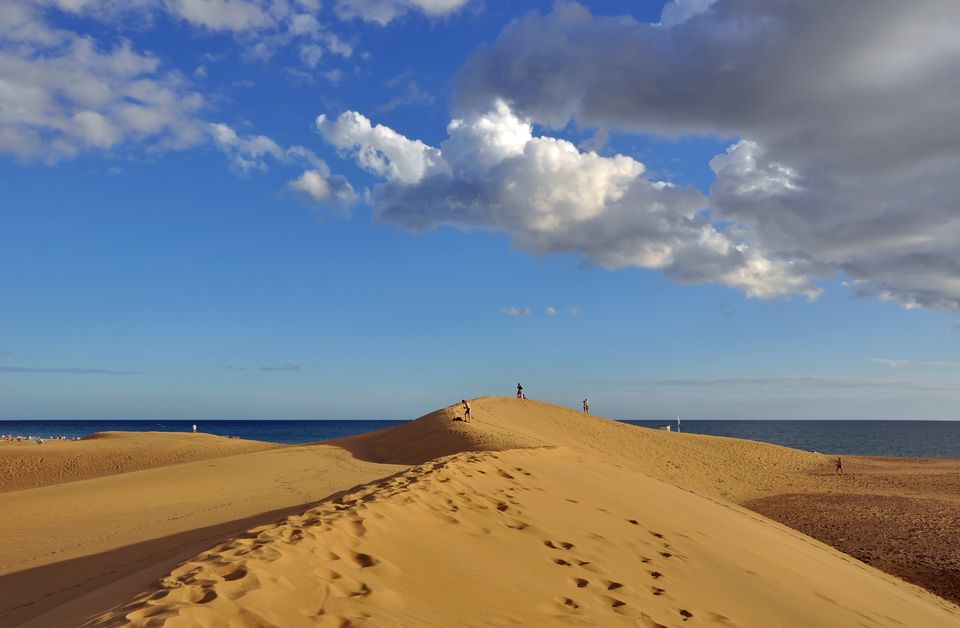
The Maspalomas dunes form a nature reserve between Playa del Inglés and the Maspalomas lighthouse. You can cross them on foot to the sea; keep to the authorised paths, as the vegetation there is protected. At the foot of the lighthouse, the Charca is a lagoon where birds stop over.
In Las Palmas, the old town of Vegueta retains its cobbled streets, the Cathedral of Santa Ana and the Casa de Colón, a colonial mansion devoted to the links between the Canary Islands and the Americas. The neighbouring district of Triana is explored along its pedestrian shopping street. On the other side of the city, Las Canteras beach stretches for several kilometres, protected by a natural rock barrier, La Barra, which calms the waves.
The centre of the island is mountainous. Roque Nublo, a basalt monolith that has become the symbol of Gran Canaria, is reached by a short path from the road; Pico de las Nieves, the highest point, offers a view as far as Mount Teide on Tenerife in clear weather. Tejeda, a white village perched facing these summits, and Artenara, with its cave houses, can be visited along the way. Risco Caído and the Sacred Mountains of Gran Canaria are a UNESCO World Heritage Site.
In the north, Teror retains handsome houses with wooden balconies around the basilica of Nuestra Señora del Pino, the island's patron saint. Arucas is dominated by the church of San Juan Bautista, in neo-Gothic style, and produces Arehucas rum. In Gáldar, the Cueva Pintada museum and archaeological park protects a painted cave and a former village of the island's first inhabitants. Further west, Agaete and its port, Puerto de las Nieves, open onto a valley where even coffee is grown.
In the east, the Guayadeque ravine is home to houses and restaurants carved into the rock.
Where and what to eat
The basis of Canarian cooking is papas arrugadas: small potatoes cooked in very salty water, served with mojo rojo, which is spicy, and mojo verde, made with coriander. Gofio, a flour made from toasted grains, accompanies many dishes. Sancocho canario combines salted fish, potatoes and sweet potato.
For fresh fish, go to Las Palmas along Las Canteras and in the La Isleta district, or to ports such as Arguineguín, Mogán and Puerto de las Nieves. Vieja, a local parrotfish, is a speciality. Queso de flor de Guía, curdled with thistle flower, comes from the north of the island.
For dessert, bienmesabe is a cream of almonds, sugar and egg yolks, associated with Tejeda, where you will also find many almond sweets. Honey rum, ron miel, is often served at the end of a meal. In the south, avoid menus translated into ten languages on the main promenades: Canarian restaurants are more likely to be found in the ports and the inland villages.
Practical tips
The airport is on the east coast, halfway between Las Palmas and the southern resorts. The intercity buses, the guaguas, connect the airport, the capital and the south. For the interior, a hire car is far more practical; the mountain roads are narrow and winding, so allow plenty of time for journeys.
The climate changes a lot from one side of the island to the other: it can be grey in Las Palmas and very sunny in Maspalomas on the same day, and noticeably cooler at altitude. Bring a jacket for the mountains. On some days, the calima, a wind laden with Saharan dust, veils the sky.
In the resorts, petty crime remains rare; simply don't leave valuables unattended on the beach.
When to go
Gran Canaria can be visited all year round thanks to a mild climate with no cold winter. Winter is the high season, when travellers from Northern Europe come in search of sun: book early for Christmas and February. Summer is hot and dry in the south, more temperate in Las Palmas.
In January and February, the almond trees blossom around Tejeda and Valsequillo. Spring is the best season for hiking in the centre, before the heat. In February, the Las Palmas carnival is among the biggest in Spain.
Frequently asked questions
Where should you stay in Gran Canaria for a first visit?
In the south, for the sun: Playa del Inglés if you want a lively atmosphere, Meloneras for a quieter stay near the Maspalomas dunes, Puerto de Mogán for a peaceful little port. Las Palmas is better suited to those who prefer a real city with an urban beach.
What should you see first?
The Maspalomas dunes and their lighthouse, the old town of Vegueta and Las Canteras beach in Las Palmas, Roque Nublo and the village of Tejeda in the centre of the island, Teror and its basilica, and the Cueva Pintada in Gáldar.
Do you need to hire a car?
Not if you are staying between the airport, the south and Las Palmas: the intercity buses, called guaguas, connect them. For the mountains of the centre and villages such as Tejeda or Artenara, a car makes visiting much simpler, on winding roads that call for caution.
When should you go to Gran Canaria?
All year round, thanks to a mild climate. Winter is the high season, in great demand among travellers from Northern Europe. January and February bring the almond trees into blossom around Tejeda and Valsequillo, and spring is ideal for hiking in the centre.
What should you try?
Papas arrugadas with their red and green mojo sauces, gofio, sancocho canario made with salted fish, fresh fish of the day such as vieja, Guía cheese and, for dessert, bienmesabe made with almonds from Tejeda.


